
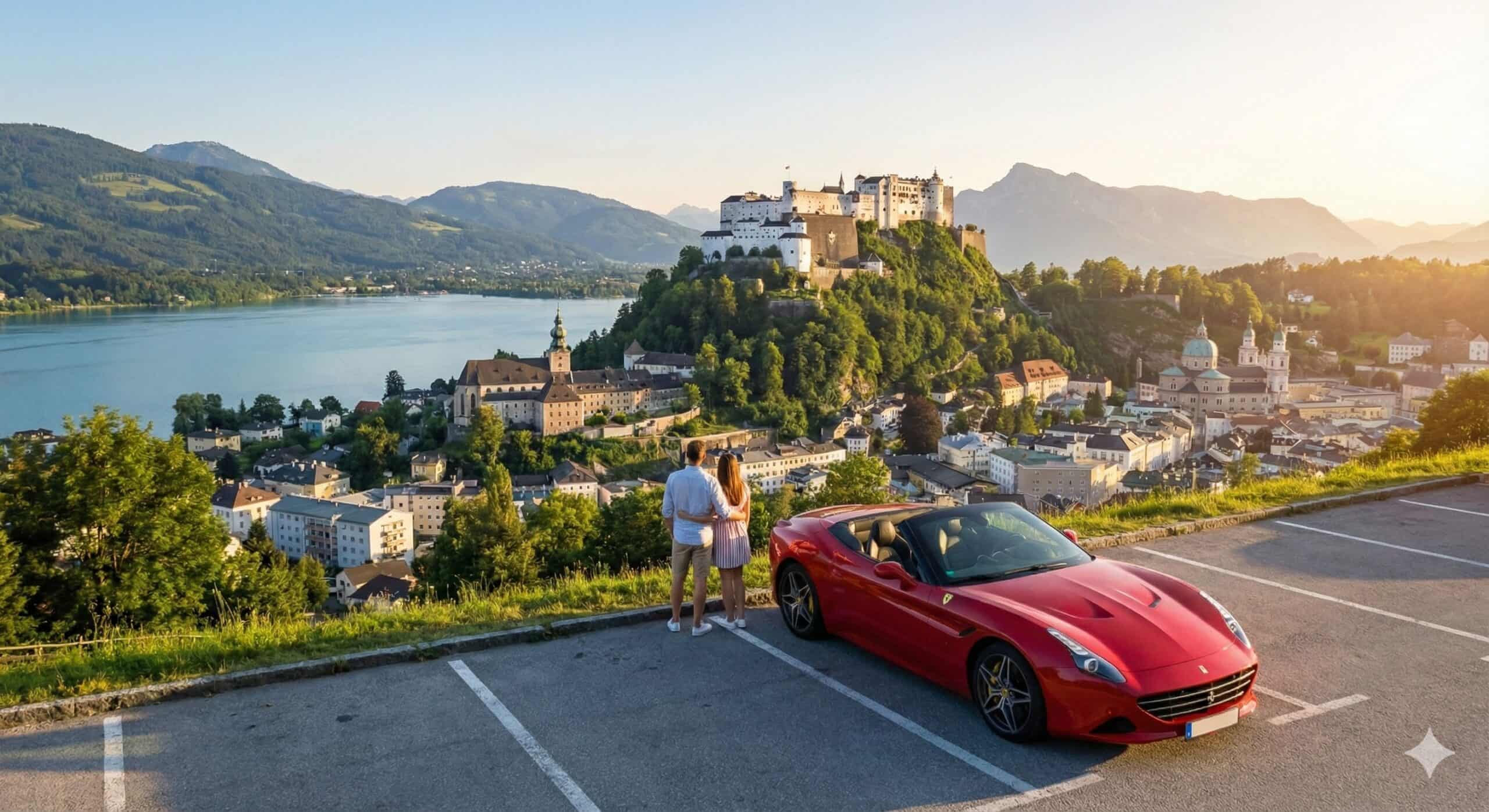
Austria road trip: the ultimate guide
Austria concentrates Europe’s greatest hits—glacier-backed passes, mirror-flat lakes, wine roads, and opera-house cities—into easy day ranges. This guide blends the iconic high alpine drives with gentler valley cruises, explains vignettes and mountain tolls, and helps you choose the ideal car for every season.
Why Austria belongs on your road-trip list
Few countries serve such variety so compactly. In a single long weekend you can link imperial Vienna, Mozart’s Salzburg, and the Tyrolean Alps, with detours onto perfectly engineered toll roads that climb above the treeline. Surfaces are superb, signage is clear, and villages are within pastry range of every pass, so you never stray far from good coffee or a lakeside swim.
Seasonality shapes the experience. Summer brings open passes, flowered meadows, and long golden evenings; autumn adds harvest colors to vine-clad hills; winter turns the high country into a snow-globe where valley roads remain reliably kept. Spring is for quiet roads and clear air, with the last snow still frosting the ridgelines.
Signature routes and when to drive them
Grossglockner High Alpine Road is Austria’s calling card: a sweeping ribbon that crests the main Alpine ridge and frames the Pasterze Glacier. It’s a summer-through-autumn drive with crisp tarmac, textbook hairpins, and viewpoints that make time disappear. Early starts reward you with light traffic and mountain light that sets the rock on fire.
Silvretta-Hochalpenstraße in Vorarlberg feels hand-drawn for drivers. It climbs to the Bielerhöhe with a cadence of corners that flatter everything from lithe convertibles to grand tourers. Morning laps mean glassy reservoirs and marmots on the margins; afternoons invite an espresso at the top and a lazy descent into the Paznaun valley.
Gerlos Alpenstraße and the Krimml Waterfalls route add a water-world flourish. The bends are broad and view-rich, the gradients kind, and the pace unhurried enough for passengers to spot spray hanging in the sun. It’s a family-friendly alpine taster that still satisfies a keen driver’s hands.
Nockalmstraße trades jagged peaks for rolling, larch-lined curves in Carinthia. The road undulates at timberline, opening and closing like breath, ideal for a light coupe or an EV with strong regen. When the larches turn copper in late September, it becomes a moving painting.
Not every highlight requires a summit. The Salzkammergut lake district strings together Hallstatt, Fuschlsee, and Wolfgangsee on water-skimming roads where the mountains plunge straight into glass. South Styria’s Wine Road meanders between farm-gate taverns and soft hills, a low-stress, high-pleasure foil to the drama up high.
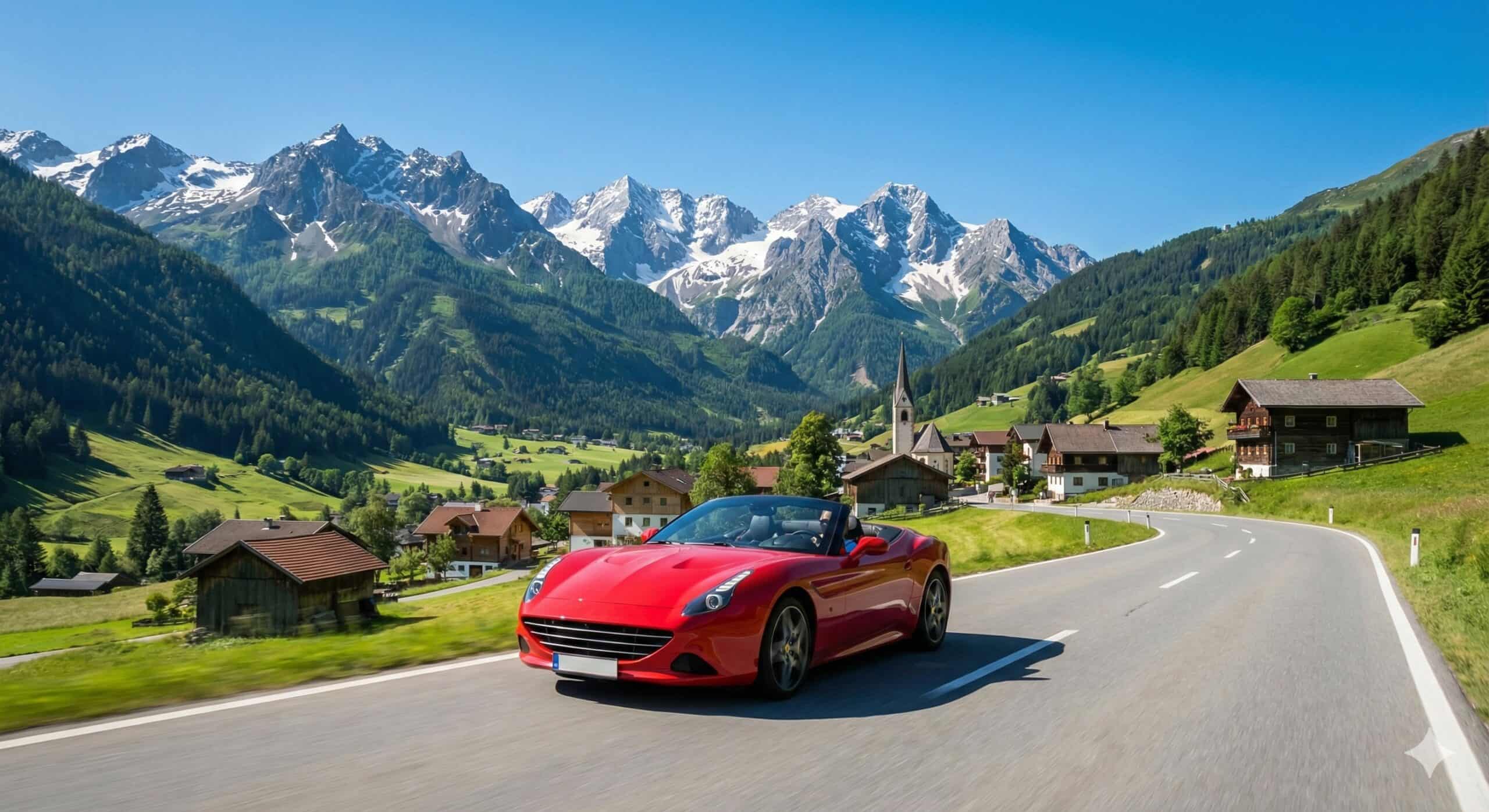
Loop ideas: east to west (and back)
Vienna to Salzburg via Wachau and the Salzkammergut makes a perfect three-day arc. Start with the Danube’s vineyard terraces and baroque town squares, then push west for lake country. Mornings are for swims and quiet roads; afternoons drift into Salzburg’s old town for a dusk stroll and a late schnitzel.
In Tyrol, Innsbruck anchors a two-day pass parade. One day you stitch Brenner byways to the Timmelsjoch viewpoint; the next you aim for the Zillertal and loop back via Gerlos. If you crave a more intimate route, slip into the Ötztal side valleys where farm lanes thread past wooden barns and cold, clear streams.
Vorarlberg and the Arlberg link with a driver’s logic. Base in Lech or Schruns, set an alarm, then take Silvretta out-and-back at sun-up before breakfast. Later, coast down to Bregenz for a lakeside promenade and a sunset over Bodensee that seems to last an hour.
Vignettes, mountain tolls, and road rules
Austria’s motorways require a vignette, available in digital and sticker form for short stays and longer stints. Several showcase alpine roads—Grossglockner, Silvretta, Nockalm, Gerlos—charge separate tolls that fund their immaculate upkeep and amenities. Keep proof of purchase handy, and remember that some mountain routes are seasonal openings dependent on weather.
Driving etiquette is refreshingly consistent. Keep right except to pass, respect variable limits, and watch for environmental “IG-L” zones that can temporarily lower speed ceilings. Winter tires are a smart default from November to early spring, and chains may be mandated on signed stretches during heavy snowfall—local bulletins and roadside signs remove the guesswork.
Whatever the season, pack for layering – light jackets for altitude shifts, comfortable driving shoes, and breathable essentials like printed shirts that work just as well for a scenic lakeside lunch as they do for an impromptu photo stop at a mountain viewpoint.
Numbers, Data, Facts
| Metric | Value / Note |
|---|---|
| Highest pass experience | Grossglockner High Alpine Road, crest ~2,500 m; Edelweißspitze lookout via cobbled spur ~2,570 m |
| Classic Vorarlberg climb | Silvretta-Hochalpenstraße to Bielerhöhe (~2,000 m), rhythmic hairpins and reservoir views |
| Waterfall highlight | Krimml Falls via Gerlos Alpenstraße; broad, family-friendly alpine road |
| Lake district | Salzkammergut arc: Fuschlsee–Wolfgangsee–Hallstätter See, scenic B-roads and village promenades |
| Motorway system | Vignette required (digital or sticker); separate tolls for select alpine showcase roads |
| Winter readiness | Winter tires strongly recommended Nov–Mar; carry chains when heading into high valleys |
| EV touring tip | Target valley fast-charging hubs; climb with a buffer and regen on the descent |
Always check seasonal openings and local road advisories before you go; alpine conditions change quickly.
Hire: the right car for Austria
Match car to terrain and season and Austria opens up. A roof-down convertible turns lake roads and valley evenings into theater. A grand tourer or performance SUV makes light work of motorway hops and luggage. If your route touches city clean-air zones, a modern hybrid or EV adds silent, stress-free urban legs; strong DC capability shortens your coffee stops.
DRIVAR’s marketplace simplifies the choice with verified listings, clear insurance terms, and optional delivery to hotels or airports. Browse by region—Vienna and Lower Austria for culture-rich loops, Salzburg and Tyrol for alpine passes, Carinthia and Styria for wine-and-lake cruising—and book with transparent mileage and deposit policies.
Plan the perfect Austria road trip
From the Grossglockner to lake country, choose the car that makes the scenery sing.
FAQ about “Austria road trip”
Planning & RulesQuick answers on timing, tolls, winter prep, and the best car types for Austria.
Most signature passes open late spring and run through early autumn, with exact dates depending on snow clearance and weather. Early mornings outside peak holidays give the smoothest runs and easiest parking at viewpoints.
Yes on motorways; buy a vignette (digital or sticker) for the Autobahn network. Showcase alpine roads such as Grossglockner, Silvretta, Nockalm, and Gerlos charge separate tolls at their gates or online. Keep receipts or digital confirmations accessible.
Yes. Valley towns and transit corridors host dependable public charging, and regenerative descents help range. Plan climbs with a buffer and favor hubs with multiple connectors; in winter, precondition the battery where possible.
Winter tires are essential and often mandatory by condition; carry chains if you expect heavy snow in higher valleys. Add warm layers, gloves, a scraper, and a headlamp. Check local advisories the night before big climbs.
For lake districts and vineyard loops, a convertible or light coupe heightens the senses. For multi-pass marathons with luggage, a grand tourer or performance SUV brings relaxed pace and long-legged gearing. For city stopovers, a hybrid or EV keeps access simple.
See trip-ready options








About Post Author
